

Moment today announces that it has raised $36 million in Series B funding led by Index Ventures, with participation from Andreessen Horowitz, Lightspeed Venture Partners, Venrock, Neo, and Contrary Capital.
The round brings Moment's total funding to $56 million and will be used to accelerate growth, advance partnerships with leading financial institutions, invest in research and development, and continue expanding its team in New York City. Bloomberg covered the announcement here.
"Demand for fixed-income has exploded, and leading financial institutions are capitalizing on this unique opportunity to seize market share” said Dylan Parker, CEO and co‑founder of Moment. “These firms are partnering with Moment to co-create the future of fixed income - empowering their fixed income teams with a differentiated platform to win new business, unlock eight-figure revenue channels, and genuinely 10x their productivity.”
The $150 Trillion Fixed Income Market Is at an Inflection Point
The funding comes amid a period of rapid transformation for the fixed income market:
- Electronic trading has skyrocketed, with corporate bond electronic volumes growing 10x over the last decade
- Rising rates - from near zero to roughly 5% - have sparked a surge in demand
- AI advances are enabling workflow automation that was once thought impossible
The round brings Moment's total funding to $56 million and will be used to accelerate growth, advance partnerships with leading financial institutions, invest in research and development, and continue expanding its team in New York City. Bloomberg covered the announcement here.
Partnering with Leading Financial Institutions
Moment recently announced strategic partnerships with LPL Financial, the largest independent broker-dealer in the U.S. with over $2T in assets under management.
“Moment’s platform is helping us reimagine what’s possible in fixed income,” said Mike Haire, Senior Vice President of Fixed Income at LPL. “In my 25+ years of experience leading large fixed income teams, Moment is the innovative solution we’ve been waiting for and the only player in the market offering a single, unified fixed income platform for wealth management firms. Their technology enables our team to be 10x more efficient with their time while delivering enhanced execution for our advisors.”
Moment is also partnering with Sanctuary Wealth, a leading hybrid RIA and broker-dealer with over $50B in assets under management.
“Moment’s fixed-income technology is so revolutionary that our senior leadership team has started weaving it into recruiting pitches with significant advisor teams.” said Josh Freeman, Head of Capital Markets at Sanctuary. “It demonstrates Sanctuary’s commitment to delivering best-in-class technology that supports our advisors’ businesses.”
“Moment is tackling the world’s largest financial market with exceptional speed and rigor,” said Jan Hammer, Partner at Index Ventures, who was a board member at Robinhood and Adyen and will join Moment as a new board member. “Their unique blend of deep fixed‑income expertise and world‑class engineering is why the most selective financial institutions are choosing them as a strategic partner.”
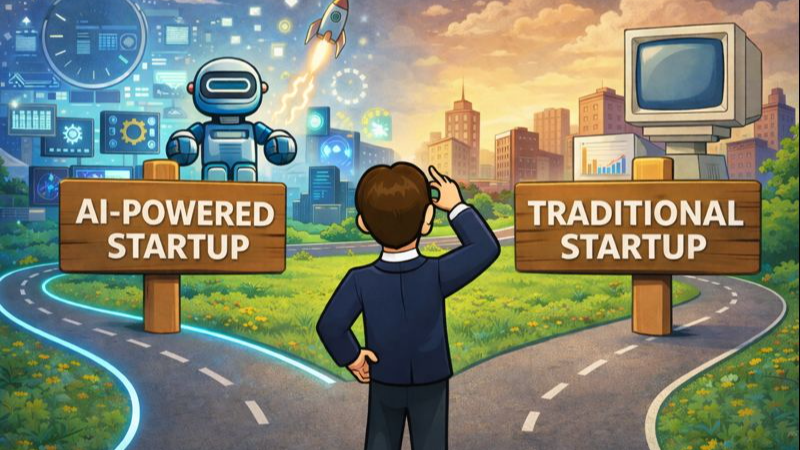
As artificial intelligence reshapes the consumer internet landscape, D2C companies stand at an inflection point. The question is no longer whether to adopt AI, but how to deploy it strategically to drive measurable impact. Over the coming weeks, I will be diving deep into specific AI applications that are transforming consumer businesses.
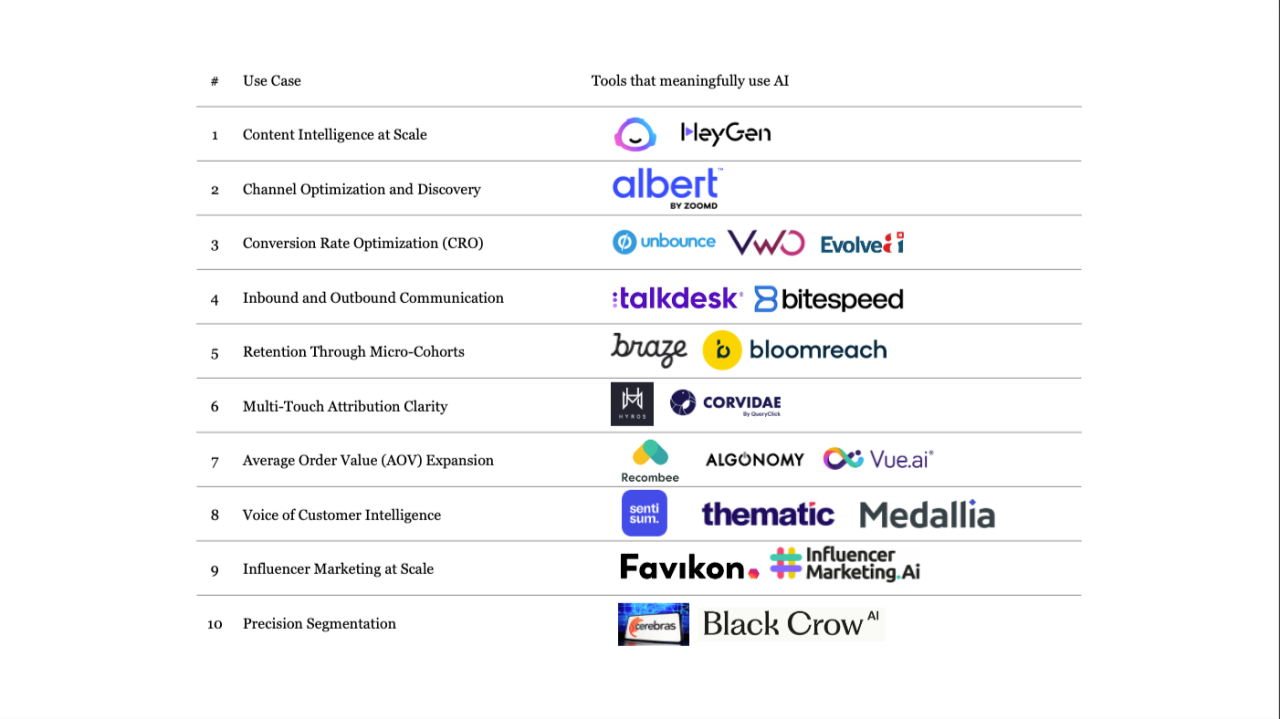
To begin, I want to share a comprehensive framework for how AI can fundamentally change marketing in consumer companies.
1. Content intelligence at scale The content creation bottleneck is disappearing. AI enables D2C brands to analyze top-performing content, identify winning themes, and generate creative assets, including images and videos, at scale. More importantly, AI can measure the ROI of individual content pieces, allowing marketers to double down on what works and quickly move away from what does not.
2. Channel optimization and discovery Deciding where to invest marketing spend has always been part intuition and part analysis. AI shifts this decisively toward data. By measuring creative performance across channels, identifying channel-specific best practices, and spotting emerging platforms early, brands can optimize their channel mix with far greater precision. Competitive benchmarking becomes continuous rather than periodic.
3. Conversion rate optimization A D2C website is among the most valuable assets a brand owns. AI transforms CRO from a slow, intuition-driven exercise into a rapid experimentation engine. From landing page optimization and test prioritization to personalized discounting, AI can surface high-impact changes and predict outcomes before engineering effort is committed.
4. Inbound and outbound communication Customer communication is becoming more automated while also becoming more personal. AI-powered outreach across calls, messaging, and chat can significantly improve conversion rates while lowering costs. The differentiator is intelligent segmentation, knowing who to contact, when to reach out, and how to personalize the interaction based on context and history.
5. Retention through micro-cohorts Retention is increasingly more valuable than acquisition. AI allows brands to move beyond broad segments to micro-cohorts defined by behavior and intent. Personalized messaging, automated experimentation, and tailored product recommendations can materially increase customer lifetime value.
6. Attribution clarity True multi-touch attribution has long been difficult to achieve in practice. AI is making it more feasible by modeling contribution across touchpoints, accounting for cross-channel effects, and enabling more confident budget allocation across the full customer journey.
7. Average order value expansion Every transaction presents an opportunity to increase basket size. AI can identify bundling opportunities, recommend complementary products, support dynamic pricing based on willingness to pay, and customize onsite journeys for different user segments.
8. Voice of customer intelligence Customer feedback is fragmented across reviews, social media, support interactions, and surveys. AI can aggregate these signals, perform sentiment analysis at scale, and translate qualitative input into actionable insights for product, marketing, and experience design.
9. Influencer marketing at scale Influencer marketing has traditionally required heavy manual effort with limited measurement. AI streamlines creator discovery, aligns influencers with target audiences, supports content planning, and improves attribution for influencer-driven revenue.
10. Precision segmentation Customer understanding now extends far beyond demographics. AI helps identify nuanced segments, uncover deeper preference drivers, refine value propositions, and even identify substitute products competing for the same customer need.
Taken together, these applications represent a meaningful transformation of the marketing function. The consumer companies that win over the next decade will not necessarily be those with the largest budgets, but those that use AI to make better decisions, move faster, and personalize at scale. The best way to start is to focus on one area where your team faces the biggest bottleneck or where better insight could unlock meaningful growth. Implement, measure, learn, and then expand.