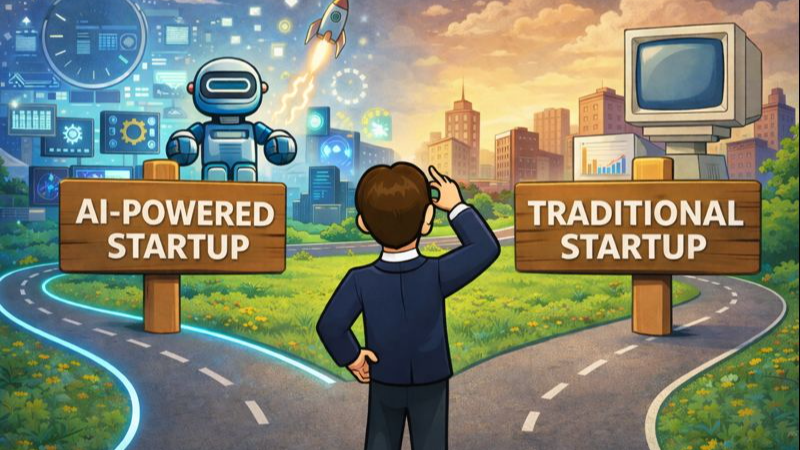
AI has moved at a super sonic speed. Capabilities are evolving every few months, tools keep changing and the noise around AI-first brands makes it hard to separate signals from hype.
We believe 2026 will mark a transformational shift for AI - moving from experimentation to becoming core infrastructure for consumer businesses. It won’t live in one function; it will cut across content, CX, supply planning and product development.
Across multiple areas, our portfolio companies are already leveraging AI and we have been pleasantly surprised by the real, measurable impact it is delivering. Despite this, many consumer founders still underestimate its relevance, which is why we are leaning in and helping our companies adopt AI more aggressively.
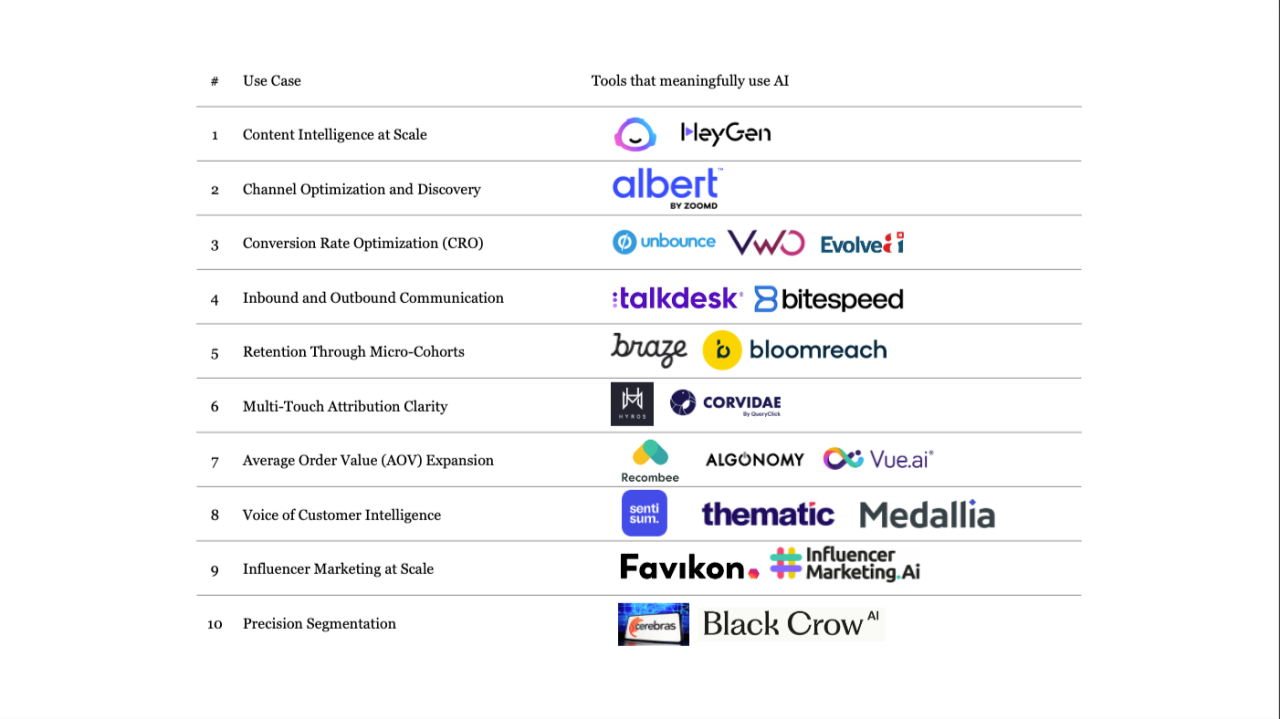
Where AI is creating real leverage today
- Content creation: Using AI for influencer shortlisting, image generation, caption variants and faster creative iteration cycles. We have seen AI compressing turnaround times from 2-3 weeks to 2-3 days at times
- Customer engagement: AI-driven bot calling and conversational tools have delivered better-than-expected ROI and interaction quality, making them viable across customer service, assisted sales and channel-specific outreach
- Hyper-personalisation: By generating personalised recommendations using face scans, scalp diagnostics and similar tools, AI is replacing generic one-size-fits-all journeys with individually tailored experiences at scale
- Faster NPD & experimentation: For formulation-heavy categories, AI is accelerating trial-and-error, helping teams narrow down what to test before investing time and money in the lab
- Supply & inventory planning: This has been one of the most powerful AI use cases we have seen. By combining AI and IoT, brands can make intelligent, real-time inventory predictions across multiple channels and SKUs, especially in high-complexity environments where different products have different turnaround times and manual planning breaks down quickly
- Competitive benchmarking: AI is turning weeks of manual research into minutes by scraping public data, reports and ad signals to benchmark customer metrics (like CAC, CPM, CTR), financial multiples and growth trends in real time
- Automation of support functions & internal processes: AI-assisted support, no-code website builders and internal 'ask AI' tools are helping teams reclaim time, freeing founders and operators to focus on higher-impact work
- Data analysis & insight generation: By simplifying dashboards and speeding up analysis, AI is helping teams reach conclusions faster
However, here are a few realities that founders should keep in mind
- AI is a starting point, not the final answer: It often produces average outputs and can hallucinate. Human judgment and context still matter far more.
- Context is everything: Clear boundary conditions and prompts determine output quality
- ROI matters: Each AI use-case should tie back to a business-critical metric, be monitorable and be able to deliver tangible business value
- Use the right tool for the job: Horizontal tools (like general LLMs) vs vertical tools (content, coding, ops) serve very different purposes
- Speed vs depth is a real trade-off: Use AI where speed is critical; rely on humans where originality and depth matter
- Stay updated on architectural shifts: Agentic AI, new models and open-source breakthroughs are changing workflows fast
- Data privacy: Privacy guardrails of AI tools are still evolving. Teams should handle sensitive data carefully
Bottom line: The next competitive advantage in consumer businesses won’t come from better ideas alone, but from how quickly those ideas are tested, learned from, and scaled; and AI is rapidly becoming the difference.